Investment enquiries
Financial projections, due-diligence materials and investor presentations.
Investor information
Answers to the most important questions about our technology, market opportunity, team and investment proposition.
We are raising a $200K pre-seed round — open now — to fund prototype development, lab verification, biological materials R&D, product design, 50 pilot units and our brand foundation. It carries us through the California & Texas pilot (Q1 2027), with a Seed round planned for Q3 2027 and Round A in Q3 2029.
Our five-year plan (2026–2031) projects revenues growing from $420K in Year 1 to $18.3M in Year 5 — $34.4M cumulative — from roughly 102K orders and 29K paying app subscribers, at just 0.23% share of the CA & TX market and 0.06% of the rest of the U.S. These are forward-looking projections, not guarantees — the full model is available to qualified investors.
25% prototype development (Core & PRO), 20% biological materials R&D, 15% lab verification, 15% product design, 15% pilot production (50 units) and 10% brand & marketing foundation. The outcome we are funding: two working, lab-validated models, 50 pilot units in use, and execution of the first U.S. pilot.
Three patent applications covering our core technologies were filed during the R&D phase — the graphene–cellulose integration process, the mycelium cultivation protocol and the layered-assembly method — alongside trade-secret protection for manufacturing know-how and the Bisomna™ and BDRS™ trademarks.
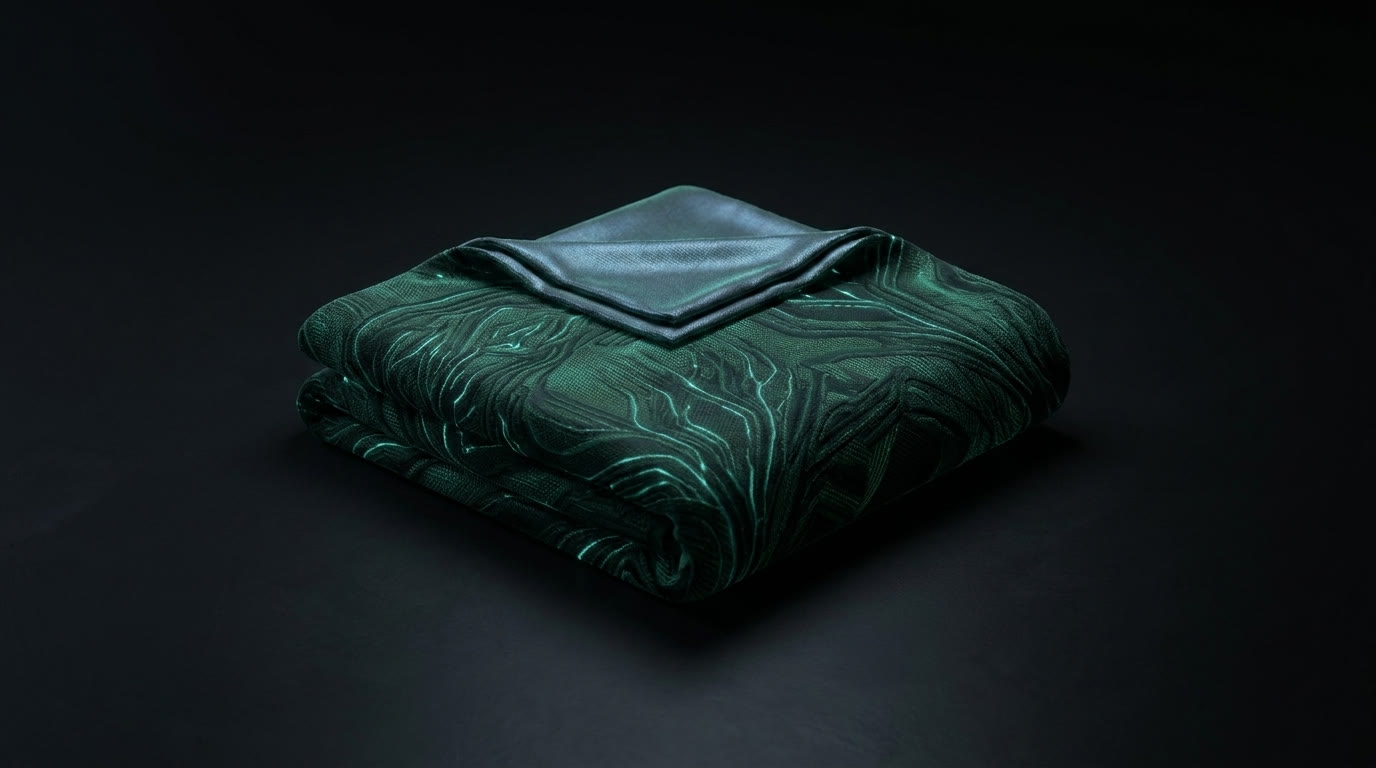
Existing smart bedding adds machinery around you — pumps, pads and trackers. Bisomna engineers the material itself: a layered biomaterial textile that shields RF, regulates temperature and distributes weight with zero electronics required. The optional PRO edition adds sensing, but the core value never depends on it.
Material properties (RF attenuation, thermal conductivity, airflow, drying rate) are measured in lab tests. Product-level sleep outcomes are being validated in a clinical programme with pre-registered endpoints, published transparently on our Science page — marked clearly as targets until results are in.
Pilot production of 50 units is funded by the current pre-seed round, following MVP development in Q4 2026. The CA & TX pilot begins in Q1 2027; full-version development follows Seed funding (Q3 2027), with a beta launch in Q1 2028 and official U.S. market entry in Q2 2028.
Bacterial cellulose and mycelium are grown in controlled bioreactors with batch-level testing; layer integration and mineral embedding run under a certified quality management system, and every unit carries a 5-year warranty.
The U.S. market potential is roughly $25B per year, with our launch-focus segment — Texas & California — worth about $4B per year. Behind it: around 70 million Americans suffer from sleep disorders, roughly 19.5 million of them in TX & CA. Globally, the sleep-aids market is projected to grow from $84.6B (2024) to $155.3B by 2034 (6.1% CAGR).
Eight Sleep, ChiliSleep and Gravity each address one slice — powered climate, cooling or weight. Bisomna is the only solution combining living biomaterials, RF shielding and passive thermoregulation in a single unpowered textile, with a published validation protocol behind it.
Pilot first: 50 units across California and Texas from Q1 2027 — the states with the highest rates of sleep disturbance. A public beta follows in Q1 2028, official U.S. market entry in Q2 2028, and national expansion from Q4 2029, led by science-forward brand education around the BDRS.
We are U.S.-first. Years 1–2 focus on California and Texas; national expansion begins in Q4 2029. International markets follow once the U.S. footprint is established.
Bisomna is a consumer textile, not a medical device, and we position it accordingly — no medical claims. Requirements centre on consumer-product safety and textile standards (including flammability and skin-contact safety) plus radio-equipment compliance for the PRO edition's Bluetooth module. Regulatory mapping is part of the current validation phase.
Initial biocompatibility testing was completed in the R&D phase. All materials are inert and skin-safe, the Core edition contains no electronics at all, and product-liability insurance is in place ahead of launch.
Certified quality-management systems are a deliverable of the manufacturing scale-up phase, alongside skin-contact textile certification for all skin-facing layers. Certification status will be published as it is granted.
The core team pairs a Materials Science PhD (biomaterial engineering) with a founder experienced in biotech commercialisation, supported by engineering, clinical-research and operations leads — 50+ years of combined experience across the network. See the Team page.
The pre-seed round funds product, lab and pilot work with a lean core team; hiring scales at Seed (Q3 2027) across manufacturing engineering, quality assurance and go-to-market roles.
A distributed model: core science and assembly in-house, with strategic partners (including SeedBiz for business architecture) and certified suppliers for regional scale, expanding market by market from 2026.
The main risks are manufacturing scale-up of novel biomaterials, validation results that differ from targets, and consumer education in a new category. Each phase of the roadmap is gated: capital deploys against milestones, and validation results are published whatever they show.
Three filed patents, proprietary cultivation and bonding know-how, and a first-mover position in biomaterial bedding create a defensible moat — competitors would need years of materials R&D to replicate the layered system.
Our plan is deliberately conservative — Year-5 revenue assumes only 0.23% of the CA & TX market and 0.06% nationally. Deployment is gated by milestones, so spending phases against actual pilot and launch results, protecting runway if adoption is slower.
Our team is ready to provide detailed answers and additional materials.
Financial projections, due-diligence materials and investor presentations.
Manufacturing, distribution, research and retail collaboration.
Product questions, press and general enquiries.